Hair Extensions give you instant length and volume, but styling them is not the same as styling natural hair. Many people assume Extensions behave exactly like their own hair. That is not always true. If you color or heat style them incorrectly, you can shorten their lifespan or damage their texture.
Clients in Menlo Park, CA, USA often ask if Extensions can be dyed, curled, or straightened. The answer depends on the type of Extensions and how you treat them. With the right approach, Extensions can be styled safely. With the wrong approach, they can dry out, tangle, or lose their natural look.
This guide explains what is safe, what is risky, and what stylists actually recommend in real salon settings.
Extensions Styling Basics: What You Should Know First
Extensions are not identical to natural hair. Even high-quality human hair Extensions go through processing before they reach you. This affects how they react to heat and color.
There are three main rules:
- Always check Extensions type before styling
- Use heat and color carefully
- Prioritize professional advice when unsure
In Menlo Park, CA, USA, stylists usually assess Extensions before allowing any chemical or heat treatment. This prevents damage and ensures a natural result.
Extensions can be styled, but they need protection and moderation.
Can You Color Extensions? What Stylists Recommend
Coloring Extensions is possible, but not always recommended. The outcome depends on the quality and type of Extensions.
Human hair Extensions
High-quality human hair Extensions can usually be toned or dyed. However, they react faster to chemicals than natural hair. That means over-processing can cause dryness.
Synthetic Extensions
Synthetic Extensions cannot be colored with regular hair dye. The fibers will not absorb color properly and may become damaged.
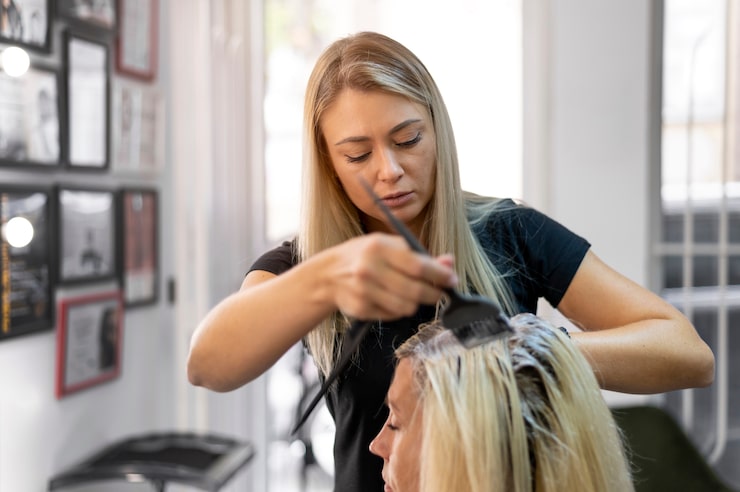
Most stylists in Menlo Park, CA, USA avoid coloring Extensions unless absolutely necessary. Instead, they recommend choosing pre-colored Extensions that match your natural shade.
If coloring is required, it should always be done by a professional. Incorrect dyeing can permanently damage Extensions and reduce their lifespan.
Can You Heat Style Extensions? The Safe Approach
Heat styling is possible with most human hair Extensions, but it must be controlled. Curling irons, straighteners, and blow dryers can all be used if you follow safety rules.
Extensions are more sensitive to heat than natural hair. Excess heat weakens strands and reduces shine.
Safe heat styling rules:
- Use heat protectant spray every time
- Keep tools at medium temperature
- Avoid repeated passes over the same section
- Let Extensions cool before brushing
In Menlo Park, CA, USA, stylists often recommend heat styling only when necessary. The goal is to preserve Extensions quality while achieving the desired look.
Extensions Types and How They React to Styling
Different Extensions react differently to heat and color.
Clip-in Extensions
Clip-ins are the most flexible. You can style them before wearing. They are easier to protect because they are not worn daily.
Tape-in Extensions
Tape-ins can be heat styled while worn, but care is needed near adhesive areas. Too much heat near bonds can weaken them.
Fusion Extensions
Fusion Extensions can be heat styled like natural hair, but still require protection. The keratin bonds can weaken with excessive heat exposure.
In Menlo Park, CA, USA, salons usually guide clients on styling limits based on installation type. This helps prevent damage and maintain natural blending.
Internal care instructions and styling guidance can be explored at https://saloncozzolino.com/services for professional Extensions maintenance tips.
Risks of Coloring or Heat Styling Extensions
Styling Extensions incorrectly can lead to several problems.
Common risks include:
- Dryness and frizz
- Tangling and matting
- Bond weakening (for tape or fusion Extensions)
- Uneven color results
- Reduced lifespan
Extensions are an investment. Over-styling reduces their value quickly.
Clients in Menlo Park, CA, USA often experience issues when using high heat settings or box dyes at home. Professional care reduces these risks significantly.
Professional vs At-Home Styling for Extensions
There is a big difference between professional styling and DIY styling.
Professional styling
- Controlled temperature
- Safe product use
- Even color application
- Protection of bonds and structure
At-home styling
- Higher risk of heat damage
- Uneven coloring
- Overuse of products
- Bond or clip damage
Stylists in Menlo Park, CA, USA usually recommend professional coloring for Extensions. This ensures consistency and prevents irreversible damage.
How to Protect Extensions During Styling
Protection is the key to long-lasting Extensions. Simple habits can make a big difference.
Follow these steps:
- Always apply heat protectant
- Detangle before heat styling
- Use low to medium heat settings
- Avoid styling wet Extensions
- Limit daily heat exposure
These habits help maintain shine and softness.
Extensions respond best to gentle, controlled styling. The less stress you apply, the longer they last.
When You Should Avoid Coloring or Heat Styling Extensions
There are situations where you should avoid styling completely.
Do not color or heat style if:
- Extensions are already dry or damaged
- Bonds are loose or weakening
- Hair is recently installed and not settled
- You are unsure of product type
In Menlo Park, CA, USA, stylists often recommend waiting a few days after installation before any styling. This helps Extensions settle naturally.
Extensions Maintenance After Styling
After styling, care becomes even more important. Heat and color increase maintenance needs.
You should:
- Use moisturizing conditioner regularly
- Avoid daily heat use
- Brush gently to prevent breakage
- Schedule salon checkups
Extensions need consistent care to maintain their appearance.
Proper maintenance ensures they stay smooth, natural, and long-lasting.
FAQ: Extensions Styling
1. Can you safely color Extensions at home?
It is not recommended. Home coloring can damage Extensions or create uneven results. Professional coloring is always safer.
2. Can you use curling irons on Extensions?
Yes, you can use curling irons on human hair Extensions. Always use heat protection and keep temperatures moderate.
3. What happens if you use too much heat on Extensions?
Excess heat causes dryness, frizz, and reduced lifespan. It can also weaken bonds in tape-in and fusion Extensions.
4. Are synthetic Extensions heat resistant?
Most synthetic Extensions cannot handle heat styling. They may melt or become damaged under high temperatures.
5. How often can you heat style Extensions?
You should limit heat styling to a few times per week. Daily heat use shortens Extensions lifespan significantly.
Final Thoughts
Extensions can be colored and heat styled, but only with the right approach. The key is control, protection, and understanding your Extensions type. When handled properly, they stay beautiful and natural for longer.